
How to Service an Ebike Drivetrain Properly
A noisy chain under motor load is more than an annoyance. On an e-bike, the extra torque can turn a slightly worn or dry drivetrain into a skipping, grinding and expensive problem surprisingly quickly. Knowing how to service an e-bike drivetrain helps protect the parts that transfer power from your legs and the motor to the rear wheel.
The good news is that routine care is straightforward. The important distinction is knowing what can be cleaned and lubricated at home, and when wear, adjustment or electronic fault symptoms need a workshop inspection.
Why Ebike drivetrain wears faster
An Ebike drivetrain does the same basic job as any other bike, but it often handles considerably more load. Mid-drive motors from Bosch, Shimano Steps, Yamaha and Fazua apply power through the chain, cassette and chainring. Add a rider changing gear under assistance on a steep hill, and the chain can be under far more strain than it would be on an unpowered bike.
Hub-motor bikes are generally kinder to their chains because the motor drives the wheel rather than the drivetrain. Even so, commuting in wet weather, road grit and frequent stop-start riding will still wear chains, sprockets and jockey wheels.
There is a trade-off with cleaning. A spotless drivetrain is useful, but aggressive degreasers, pressure washers and excessive water can wash lubricant from bearings and contaminate brake discs. The aim is clean, lubricated and correctly adjusted, not chemically stripped every weekend.

What you need before servicing an ebike drivetrain
Set up somewhere dry with good light. Switch the e-bike off, remove the battery where practical, and keep water and cleaning products away from the battery terminals, display, motor connections and charging port. Never use a pressure washer on an e-bike.
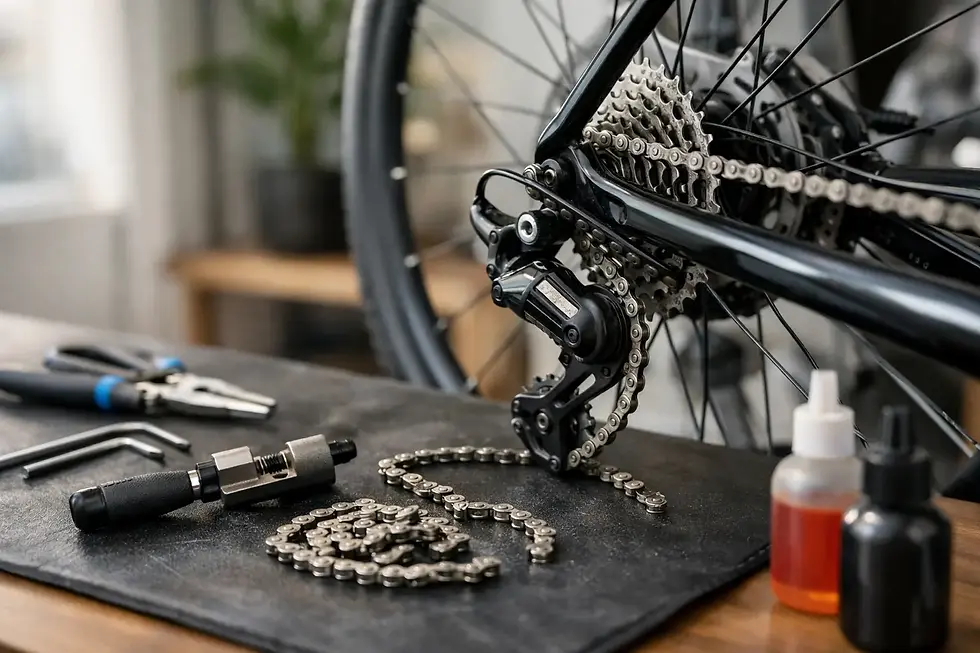
For regular maintenance, you will need a clean rag, a soft brush, a chain-cleaning brush or tool, bike-safe degreaser, suitable chain lubricant and a chain wear gauge. A pair of gloves is sensible, particularly if the chain is heavily soiled. If you intend to remove the rear wheel or adjust gears, have the correct Allen keys and torque information for your specific bike to hand.
Choose lubricant for the conditions. Wet lube lasts better through winter rain but attracts more grime if applied too heavily. Dry lube keeps a cleaner chain in dry conditions but needs more frequent application. Many year-round riders around Eastbourne will benefit from using wet lube through the wetter months, then applying it sparingly.
How to service an Ebike drivetrain step by step
Start with a quick inspection
Before cleaning anything, turn the cranks backwards and listen. Look for a stiff chain link, excessive side-to-side movement in the derailleur, damaged teeth, a bent derailleur hanger or loose jockey wheels. Check the chainring and cassette for hooked, pointed teeth. Healthy teeth have a fairly even profile; badly worn teeth often look like little shark fins.
Also inspect the chain for orange corrosion, packed grit and obvious damage. If the chain has jumped off or the bike has been knocked over on its drive side, do not assume a simple adjustment will fix it. A bent hanger can make every gear behave poorly.
Check chain wear before deep cleaning
Use a chain wear gauge according to its instructions. This is one of the most useful tools an e-bike owner can own. Replacing a chain at the correct point is much cheaper than replacing a worn chain, cassette and chainring together.
The replacement point depends on the drivetrain. Many modern narrow chains should be replaced at around 0.5% wear, while some wider systems may allow 0.75%. Check the guidance for your chain and drivetrain manufacturer rather than relying on one universal figure. If the gauge indicates significant wear, avoid fitting a new chain without checking the cassette and chainring as well. A new chain may skip on worn sprockets, particularly under motor assistance.

Clean the chain, cassette and jockey wheels
Apply degreaser to a rag or brush rather than spraying it freely around the bike. Back-pedal the chain through the rag, working until the outside plates are clean. Use a brush to clean between cassette sprockets and around the derailleur jockey wheels, where compacted black grease and grit often collect.
A chain-cleaning tool can make this quicker, but it is not essential. Keep the degreaser controlled and do not soak the motor area. If you rinse afterwards, use a gentle low-pressure flow or a damp cloth. Dry the drivetrain thoroughly with a clean rag and allow any remaining moisture to evaporate before lubricating.
Lubricate each roller, not the whole bike
Apply one small drop of lube to each chain roller while slowly back-pedalling. The rollers are the moving parts that need lubrication. Coating the outside of the chain only attracts dirt and makes the next clean harder.
Once the lube has worked through the chain, wipe the outer plates carefully with a clean rag. It can feel as though you are removing the lubricant you have just applied, but the useful amount remains inside the rollers. This simple wipe is what keeps the drivetrain quieter and cleaner.
Check gear shifting under light load
With the rear wheel safely raised or the bike in a stand, shift through every gear gently. On an e-bike, reduce assistance or turn the system off for adjustment work. Do not force shifts by pedalling hard against the motor.
If the chain hesitates moving to a larger rear sprocket, the cable tension may be slightly low. If it hesitates moving to a smaller sprocket or chatters in the higher gears, tension may be too high. Make tiny barrel-adjuster changes, normally a quarter turn at a time, and recheck. Turning anti-clockwise generally increases tension, but stop if you are unsure as routing and setup can vary.
Limit screws and derailleur hanger alignment are different matters. Incorrect limit adjustment can send the chain into the spokes or off the cassette, so these are best left alone unless you understand the system. Electronic shifting also has its own adjustment and diagnostic procedures.
Riding habits that protect the drivetrain
Good maintenance starts on the road. Ease off pedal pressure briefly as you change gear, especially when climbing. The motor will usually continue to assist according to the system settings, but a lighter pedal stroke gives the chain time to move cleanly between sprockets.
Shift down before coming to a stop so you can pull away in an easier gear. Avoid cross-chaining where possible, such as using the smallest front chainring with the smallest rear sprocket on a multi-chainring bike. On a single-chainring e-bike, use the full cassette but avoid prolonged hard pedalling in gears that create an obvious chain angle.
If your bike has a walk-assist function, use it when pushing up a steep ramp rather than forcing the drivetrain while walking beside it. Small habits like these can make a noticeable difference to chain and cassette life.
How often should you service an e-bike drivetrain?
For a dry-weather leisure rider, wipe and lubricate the chain every 100 to 150 miles, or whenever it sounds dry. For all-weather commuting, inspect and wipe it weekly, then clean and relubricate after particularly wet or gritty rides. A full drivetrain clean may be needed every few weeks in winter, but frequency depends on conditions rather than the calendar.
Check chain wear every month if you ride regularly, and more often on a powerful mid-drive e-bike. A professional service is worthwhile at least annually, or sooner if you cover high mileage. The workshop can assess chain wear, cassette condition, chainring teeth, bearing play, derailleur alignment and any software or motor-related issues at the same time.
When a drivetrain problem needs professional attention
Some symptoms are not routine maintenance jobs. Book the bike in if the chain skips under power after cleaning and lubrication, gears will not index consistently, the derailleur has been hit, or the chain repeatedly drops. A clicking that occurs only when assistance engages may also point to a worn freehub, chainring, crank interface or motor-related issue rather than a simple chain problem.
Do not continue riding if the chain is badly rusted, damaged or skips heavily under load. It can damage the cassette and may fail at an awkward moment. For Bosch, Shimano, Yamaha, Fazua and GoCycle-equipped bikes, Eastbourne Cycles can distinguish between ordinary mechanical wear and faults that require brand-specific diagnostics.
A final practical check before your next ride
After servicing, spin the cranks, shift through the gears and wipe away any excess lubricant. Then take a short, gentle test ride before relying on the bike for a commute or longer trip. A quiet chain, crisp shifts and a clean drivetrain are not just satisfying - they are the best signs that your e-bike is ready to keep doing the work.


Comments