
Prepare your bike for winter riding: 2026 guide
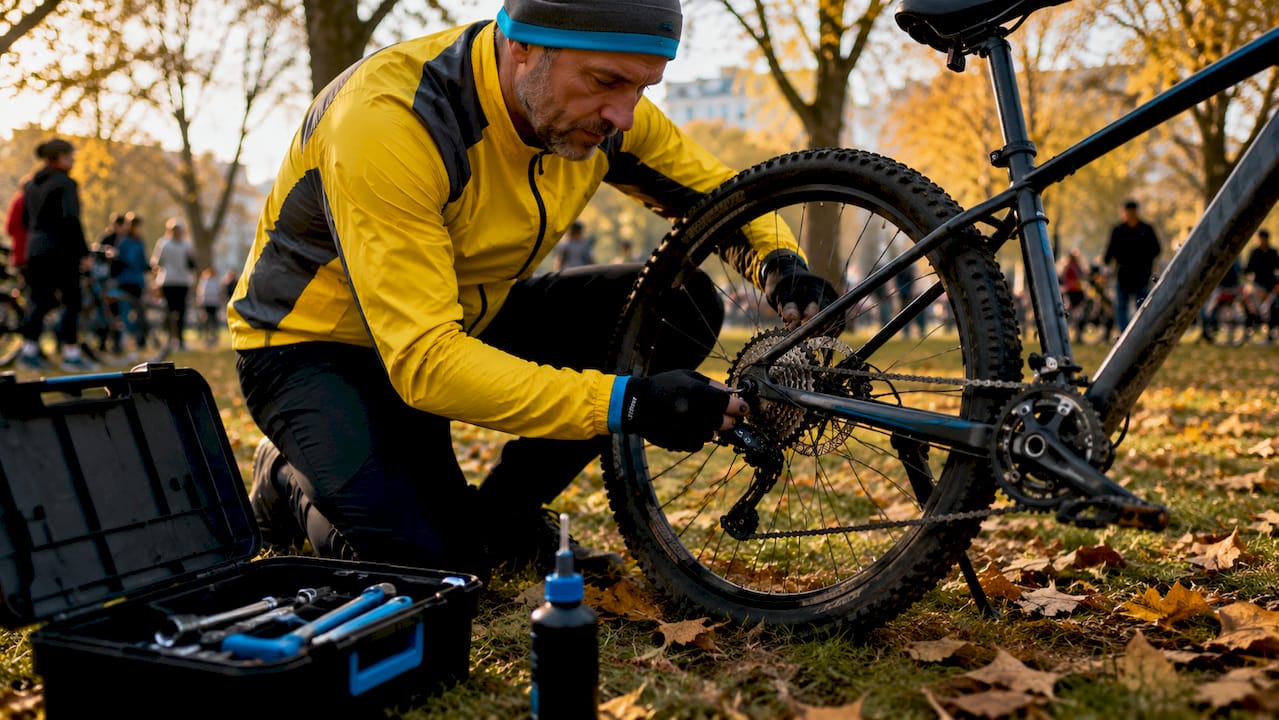
Preparing your bike for winter riding means performing targeted maintenance, fitting winter-appropriate components, and adjusting your riding habits to protect both your bike and yourself. Winter conditions introduce road salt, grit, standing water, and reduced daylight, all of which accelerate component wear and reduce rider safety. The good news is that a consistent routine of winter bike maintenance, rather than occasional deep servicing, keeps your bike reliable and your rides enjoyable. Eastbourne Cycles recommends treating winter riding as a distinct discipline, one that rewards small, regular efforts far more than reactive repairs after damage is done.
What maintenance tasks keep your bike running smoothly in winter?
The single most damaging force on a winter bike is road salt. Salt corrodes bearings and pivots within days of exposure, not weeks. That means a post-ride wash is not optional; it is the most protective habit you can build.
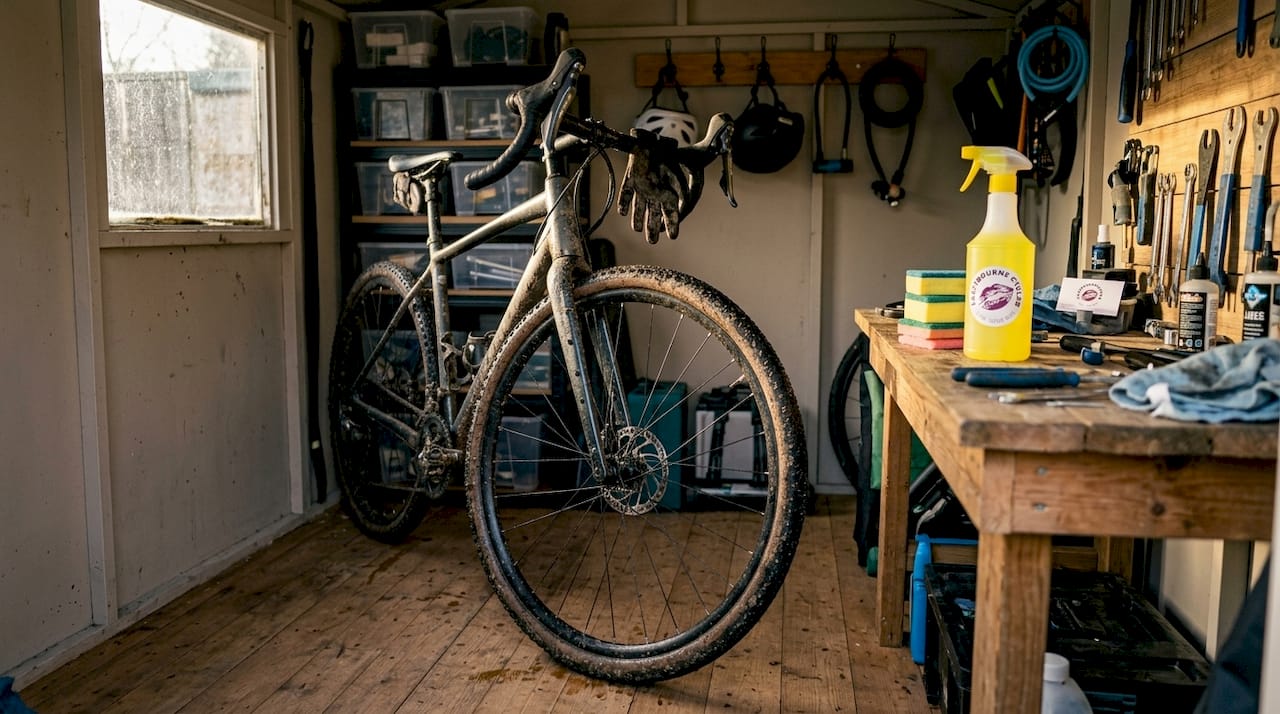
The second major threat is what mechanics call “grinding paste.” Grit mixed with lubricant forms an abrasive compound that erodes your chain, cassette, and chainrings far faster than dry riding ever would. Keeping your drivetrain clean and properly lubricated is the most cost-effective maintenance you can do.
Chain lubrication
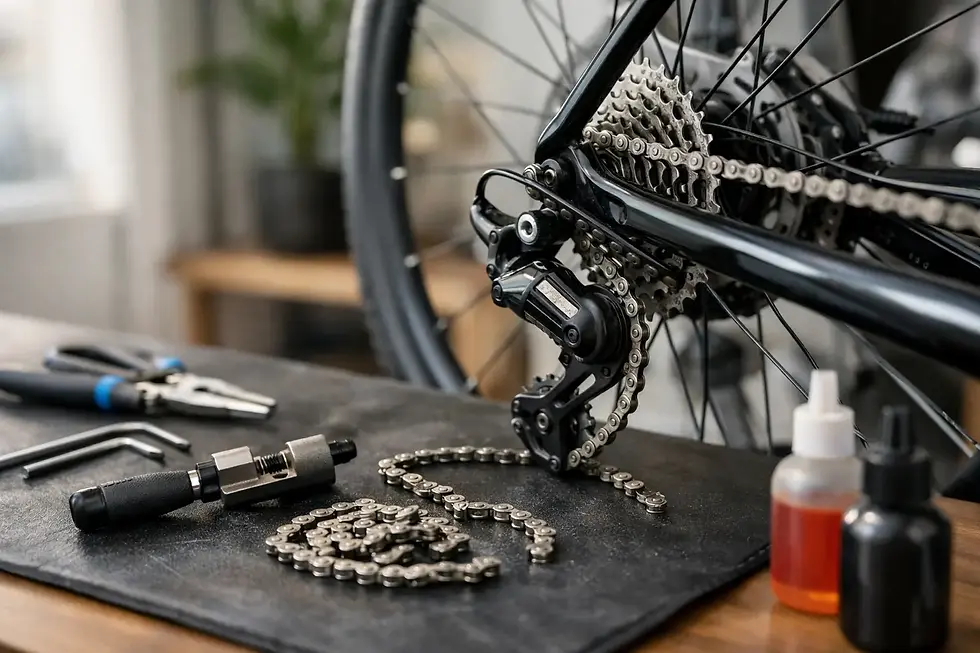
Wet-formula chain lubricant is the correct choice for winter. Dry or wax lubricants wash off quickly in rain and offer no protection against salt. Reapply wet lube weekly, or after any ride in wet or salty conditions.
Timing matters too. Apply lubricant 3–4 hours before a ride to allow it to penetrate the chain links fully and let excess solvent evaporate. Lubricant applied immediately before riding sits on the surface and attracts grit rather than repelling it.
Cleaning methods
Rinse your bike after every ride in wet or salty conditions using a garden hose or a bucket and sponge.
Avoid high-pressure washers entirely. They force water past bearing seals and, on e-bikes, into electronic components.
Pay particular attention to the drivetrain, brake callipers, and pivot points where salt accumulates.
Dry the bike thoroughly after washing, especially the chain and bottom bracket area.
Check brake pads for embedded grit after cleaning. Contaminated pads score your rims or disc rotors quickly.
Pro Tip: Use a garden sprayer set to a gentle fan pattern rather than a direct jet. It removes road grime effectively without the pressure that damages seals.
Consistent post-ride cleaning is the single most effective way to extend the life of your drivetrain and bearings through a British winter. Salt does not give components time to recover; it works continuously until you wash it off.
Brake inspection
Hydraulic disc brakes perform well in wet conditions but still require regular pad checks. Rim brakes lose stopping power in rain and wear pads faster on wet, gritty rims. Check pad thickness every two weeks during winter and replace pads before they reach the wear indicator. A pre-ride safety check takes under five minutes and catches brake issues before they become dangerous.
Which components and gear upgrades improve winter riding performance?
Fitting the right components before winter arrives is far easier than replacing worn parts mid-season. The upgrades below address the four main challenges of winter riding: poor traction, low visibility, spray and grime, and drivetrain wear.
Tyres: Switch to wider tyres in the 35–45mm range and lower your tyre pressure by 5–10 psi compared to your summer setting. Wider tyres spread your weight over a larger contact patch, improving grip on wet tarmac and loose surfaces. Puncture-resistant models with a reinforced belt reduce the risk of flats from road debris. Studded tyres are worth considering if you ride in areas prone to ice.
Mudguards: Full-coverage mudguards, sometimes called fenders, block spray from the road and protect your drivetrain, brakes, and the rider behind you. Clip-on guards offer some coverage, but full-length guards that extend close to the ground are significantly more effective.
Lights: A minimum 400-lumen front light is the standard for winter visibility. Pair it with a rear light of at least 50 lumens and add reflective tape to your frame, helmet, and panniers. Daylight hours in the UK drop sharply from october onwards, making lights non-negotiable even for daytime commutes in overcast conditions.
Protective sprays: Apply a water-displacing spray such as GT85 or a dedicated frame protector to pivot points, cable entry points, and exposed metal after cleaning. This slows corrosion between washes.
Pro Tip: Test your new tyre pressure in autumn, before temperatures drop and rubber hardens. Experimenting with pressure early lets you find the lowest safe setting without risking pinch flats in the cold.
E-bike battery care in cold weather
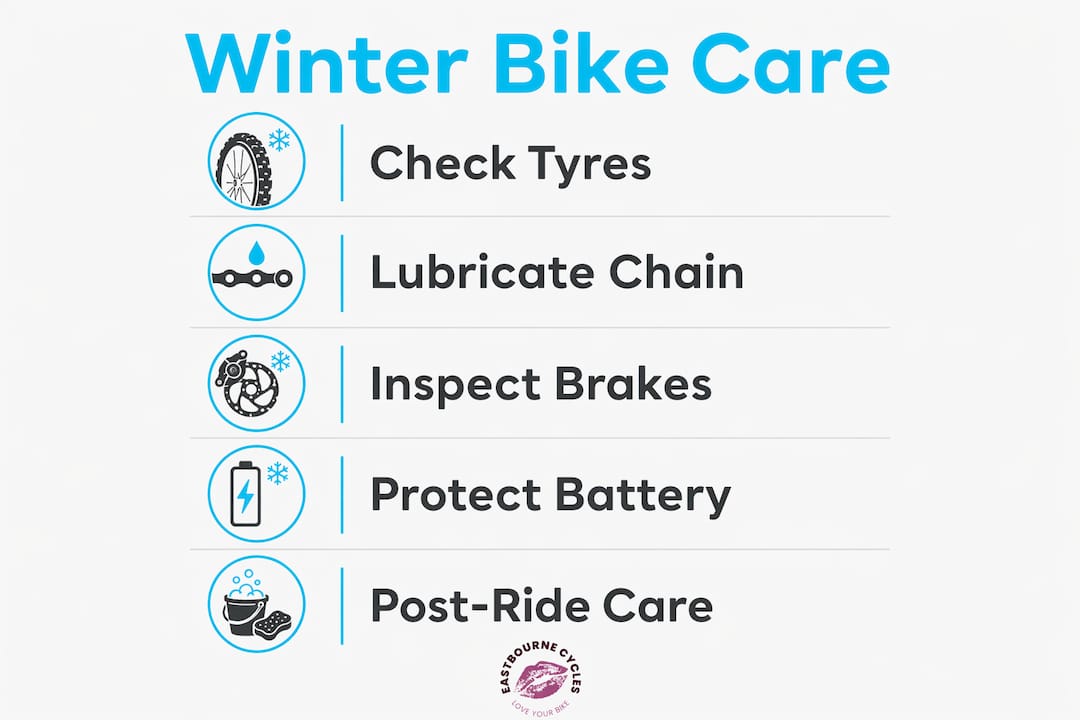
Cold temperatures reduce lithium-ion battery capacity noticeably. Store your e-bike battery indoors overnight and reattach it just before riding. Avoid charging a battery that is very cold; bring it to room temperature first. For detailed guidance on protecting your battery through winter, the e-bike battery maintenance guide from Eastbourne Cycles covers charging cycles, storage temperatures, and capacity management.
How should you adjust your riding and post-ride habits in winter?
Winter riding rewards consistency over perfection. Chasing a mechanically flawless bike before every ride leads to frustration. Instead, build a short daily routine that catches small problems before they grow.
Your riding style itself needs adjustment. Wet roads and leaf-covered surfaces reduce braking distances significantly. Brake earlier, corner more gently, and avoid sudden changes in direction. Ride around deep puddles where possible; standing water often hides potholes and conceals salt-saturated slush that accelerates corrosion.
After each ride, follow this routine:
Wipe down the frame, fork, and drivetrain with a dry cloth.
Check the tyres for embedded glass, flint, or debris and remove it before it works through the tread.
Inspect brake pads and cables for wear or fraying.
Reapply wet lube to the chain if the ride was wet or longer than an hour.
Store the bike in a dry space. A damp garage accelerates rust on steel components.
Pro Tip: Carry a small emergency kit on every winter ride: a spare inner tube, tyre levers, a multi-tool, and a compact pump. Add a lightweight waterproof layer in case the weather turns. Cold hands make roadside repairs much harder, so pack thin liner gloves too.
Knowing how often to service your bike during winter is also worth planning ahead. A professional check every six to eight weeks during heavy winter use catches bearing wear, cable stretch, and brake issues that are easy to miss on a daily inspection.
What common mistakes should you avoid when winterising your bike?
Most winter bike damage is preventable. These are the mistakes that cause the most harm.
Using the wrong lubricant. Dry or wax lubes are designed for dry conditions. They wash off in rain within minutes, leaving your chain unprotected. Always use a wet-formula lube in winter.
Skipping tyre pressure checks. Over-inflated tyres reduce grip on wet surfaces. Under-inflated tyres risk pinch flats, especially when rubber stiffens in cold temperatures. Check pressure before every ride.
Using a power washer. High-pressure water jets destroy bearing seals and push water into bottom brackets, hubs, and headsets. Use a gentle rinse instead.
Ignoring grinding paste build-up. Grit and old lubricant combine into an abrasive paste that grinds away your chain and cassette. Clean the drivetrain thoroughly at least once a week during winter riding.
Neglecting lights and brakes. Harsher conditions mean faster wear. Check both systems every two weeks, not just when something feels wrong.
Mismanaging e-bike battery storage. Leaving a lithium-ion battery in a cold garage overnight reduces its range and, over time, its total capacity. Bring it inside. The Bosch e-bike maintenance guidance from Eastbourne Cycles is particularly useful for riders with Bosch-powered systems.
Pro Tip: Set a weekly five-minute check on the same day each week. Treat it like checking your tyre pressure before a long ride. Regularity matters far more than thoroughness on any single occasion.
Key takeaways
Consistent, minor maintenance is the most effective way to keep a bike safe and reliable through winter, far more so than occasional deep servicing.
Point | Details |
Use wet-formula lube | Apply weekly or after wet rides, 3–4 hours before riding for best penetration. |
Wash off road salt promptly | Salt corrodes bearings within days; a gentle post-ride rinse prevents lasting damage. |
Fit wider tyres at lower pressure | 35–45mm tyres dropped 5–10 psi improve grip and reduce the risk of pinch flats. |
Install 400-lumen front lights | Minimum 400 lumens front and a bright rear light are non-negotiable for UK winter visibility. |
Protect e-bike batteries from cold | Store batteries indoors overnight and bring them to room temperature before charging. |
Why small habits beat big servicing sessions in winter
I have seen the same pattern repeat itself every autumn at Eastbourne Cycles. Riders bring in bikes in november that have not been touched since summer, expecting a single service to carry them through to spring. The damage is always worse than they expect: corroded cables, pitted bearings, worn cassettes, and brake pads ground down to the metal. A single service can fix all of that, but it cannot undo months of salt exposure in one visit.
What actually works is the five-minute routine. Wipe the bike down. Check the chain. Squeeze the brake levers. It sounds almost too simple, but riders who do this consistently arrive for their winter service with bikes in genuinely good condition. The service takes less time, costs less, and the bike performs better throughout the season.
Winter riding is also a mindset shift. You are not trying to replicate summer performance. You are managing conditions, protecting components, and building confidence on roads that behave differently every day. Riders who accept that tend to enjoy winter cycling far more than those who fight it. Good preparation does not just protect your bike. It makes you a calmer, more confident rider when the roads are at their worst.
— Guy
Winter bike servicing at Eastbourne Cycles
Getting your bike ready for winter is straightforward when you have the right support. Eastbourne Cycles offers seasonal bike servicing carried out by skilled local mechanics with over 12 years of experience, including factory-level diagnostics for Bosch, Yamaha, and Shimano systems.

Whether you need winter tyres fitted, mudguards installed, or a full drivetrain clean before the cold sets in, the team at Eastbourne Cycles handles it efficiently and transparently. E-bike riders can also book specialist e-bike servicing to cover battery checks and electronic system diagnostics. If you are considering a new bike better suited to winter conditions, the new bikes and e-bikes range includes models built for year-round riding. Book your winter service at Eastbourne Cycles today.
FAQ
What lubricant should I use for winter bike maintenance?
Use a wet-formula chain lubricant in winter. Reapply weekly or after any wet or salty ride, and apply it 3–4 hours before riding to allow full penetration.
How wide should my winter bike tyres be?
Tyres in the 35–45mm range offer the best balance of grip and puncture resistance for winter riding. Lower your tyre pressure by 5–10 psi compared to your summer setting to improve traction.
Can I use a pressure washer to clean my bike in winter?
No. High-pressure washers damage bearing seals and can force water into e-bike electronics. Use a garden hose on a gentle setting or a bucket and sponge instead.
How often should I service my bike during winter?
A professional service every six to eight weeks during heavy winter use is a sensible cadence. Supplement this with a brief daily check covering the chain, brakes, and tyres.
How do I protect my e-bike battery in cold weather?
Store the battery indoors overnight and reattach it just before riding. Never charge a battery that is very cold; allow it to reach room temperature first to protect its capacity and lifespan.
Recommended

Comments