
How e-bike battery maintenance works: 2026 guide
- Karl Cowell
- 9 hours ago
- 8 min read

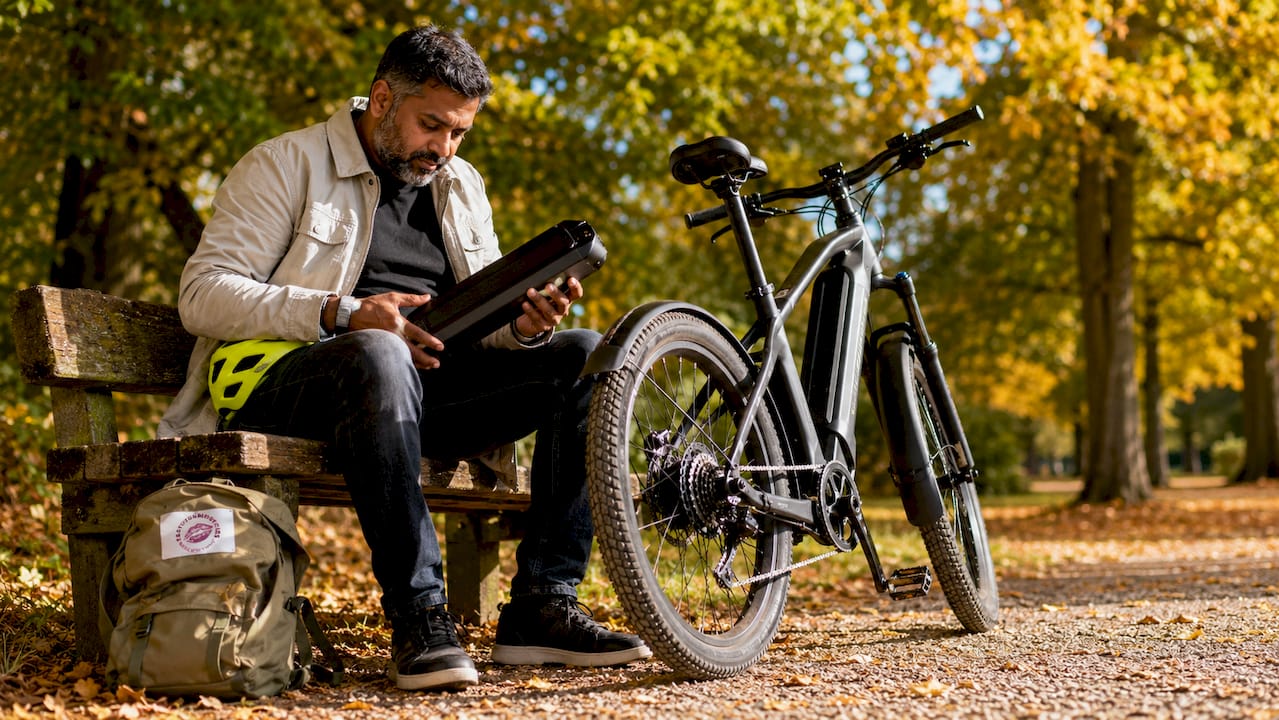
E-bike battery maintenance is the process of managing charge cycles, temperature, storage conditions, and periodic diagnostics to preserve capacity and extend service life. Your battery is the most expensive single component on the bike. E-bike batteries cost 30–50% of the total bike price and last 500–1,000 full charge cycles, roughly 3–7 years. That lifespan is not fixed. How you charge, store, and care for the battery determines whether it reaches the top of that range or falls well short. The Battery Management System (BMS) sits at the heart of every lithium-ion pack, monitoring cell voltage and temperature in real time. Understanding how e-bike battery maintenance works means understanding how to keep that system working accurately.
What are the best charging practices to extend battery life?
Charging habits have the single greatest impact on long-term battery health. Industry guidelines recommend keeping charge between 20% and 80% for daily use to reduce cell stress. Staying within that window means the cells never reach the high-voltage state that accelerates degradation, and they never drop into the deep-discharge zone that can damage cell chemistry permanently.
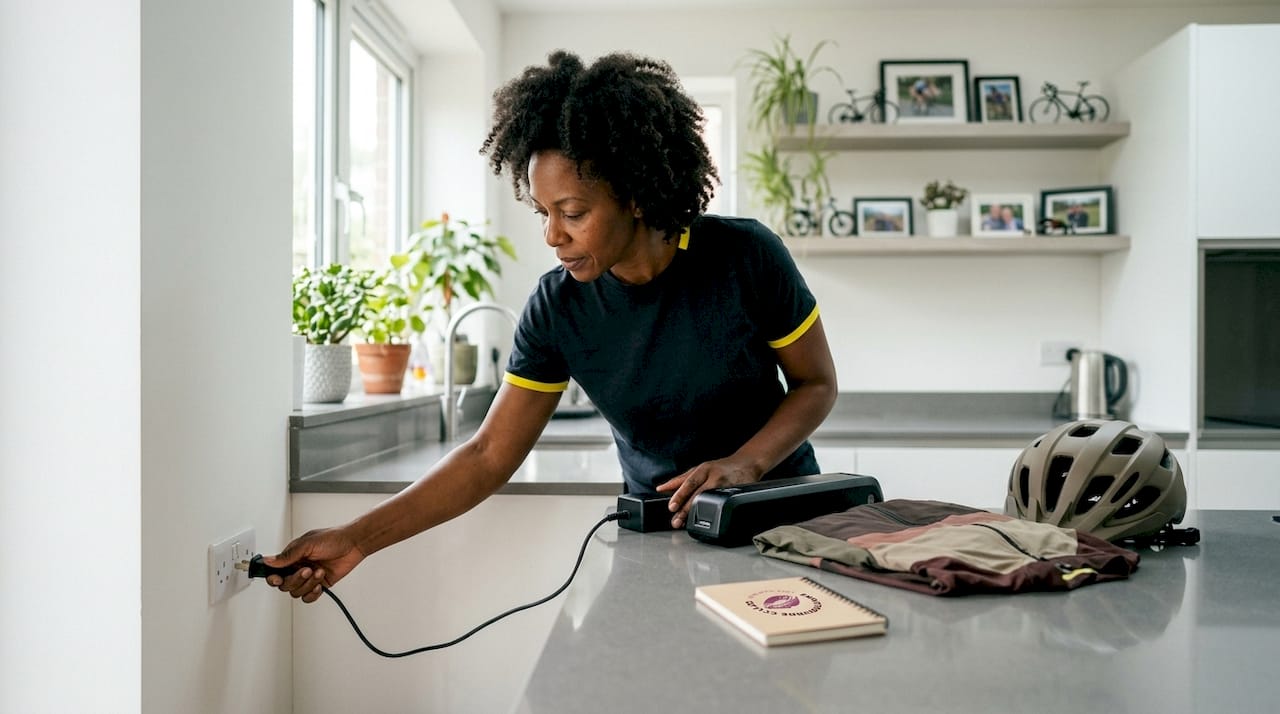
Robby Deziel, writing for Consumer Reports, stresses that avoiding full depletion is the single most important habit for prolonging lithium-ion battery life. Most riders focus on not overcharging, but running the battery flat repeatedly causes just as much harm. If you regularly finish a ride with the display showing 5% or less, you are shortening the battery’s usable life with every trip.
Here are the core charging habits worth building into your routine:
Charge after most rides rather than waiting for the battery to run low.
Unplug once the battery reaches around 80% for everyday use.
Use only the charger supplied by the manufacturer or an approved replacement.
Avoid fast charging unless you genuinely need it. Slower charging generates less heat and puts less strain on the cells.
Never leave the battery on charge overnight as a habit. Prolonged time at 100% accelerates degradation.
The BMS tracks each cell’s state of health, but its readings drift over time if the battery never sees a full cycle. A quarterly full charge cycle recalibrates the BMS for accuracy. To do this, drain the battery to around 5%, then slow charge it fully to 100%. Do this no more than once every three months. It is not a regular charging method; it is a calibration tool.
Pro Tip: Set a phone reminder every three months for your BMS calibration cycle. It takes no extra effort and keeps your battery’s state-of-health reading accurate, which matters when you are deciding whether to replace the pack.
How does temperature affect e-bike battery health?
Temperature is the second biggest factor in battery degradation, and it is the one most riders underestimate. Lithium-ion cells lose capacity faster when exposed to heat above 40°C or cold below 0°C. Both extremes cause internal chemical changes that are not reversible.
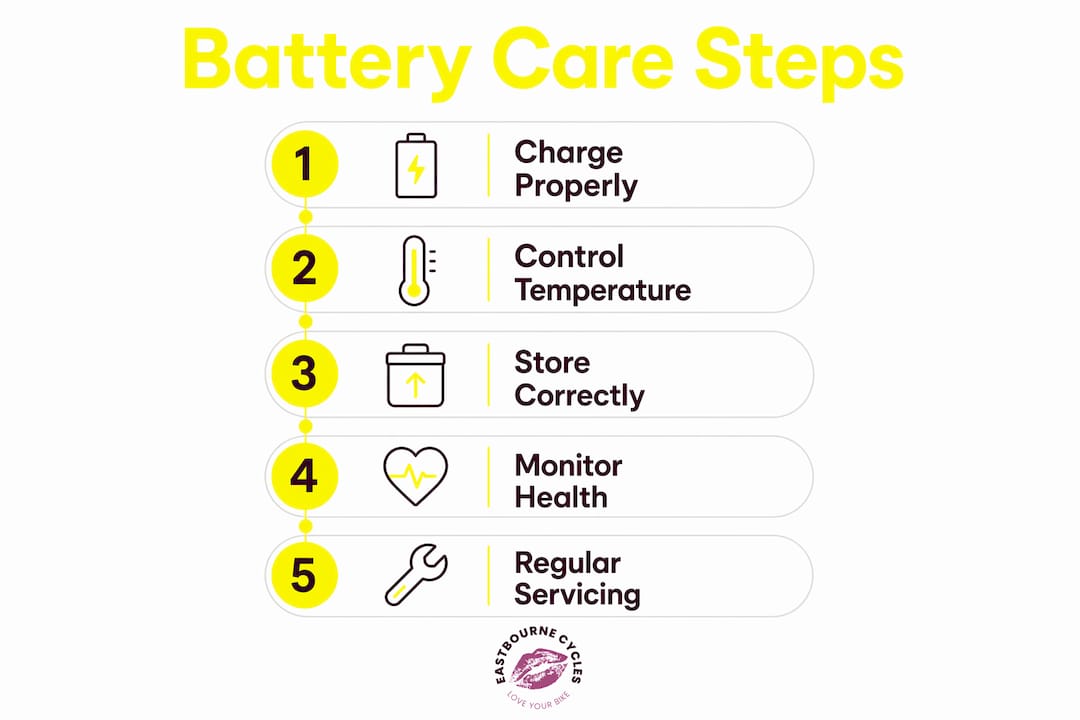
Cold weather is particularly deceptive because the battery appears to work normally once it warms up. The capacity loss during a cold ride is largely temporary. The real damage happens when you charge a cold battery without letting it warm first. Cold batteries must warm for 30 minutes before charging to avoid cell damage. Charging a battery that is still cold from a winter ride forces current into cells that cannot accept it evenly, creating localised stress that compounds over time.
Practical steps for managing temperature exposure:
Bring the battery indoors after every cold-weather ride.
Allow at least 30 minutes at room temperature before plugging in.
Never charge in direct sunlight or near a radiator.
Avoid leaving the bike in a hot car boot during summer months.
Store the battery at a moderate indoor temperature year-round.
Bosch experts emphasise temperature control for both charging and storage as the primary way to prevent internal damage. This is not brand-specific advice. It applies to every lithium-ion pack regardless of manufacturer.
Pro Tip: In winter, keep the battery inside your home rather than in the garage. A garage that drops below freezing overnight will degrade the pack faster than a full season of hard riding.
What are the best storage methods for e-bike batteries?
Proper storage is where many riders lose months of battery life without realising it. The two most damaging storage states are fully charged and fully depleted. Both accelerate cell degradation during periods of inactivity.
Long-term storage requires a charge level of 30–60% and cool, dry temperatures between 0°C and 20°C to prevent capacity loss. A battery stored at 100% charge undergoes continuous low-level stress from the high voltage state. A battery stored at 0% risks falling into deep discharge, which can make it unrecoverable.
Follow these steps when storing your battery for more than two weeks:
Charge the battery to between 40% and 60% before storing.
Remove the battery from the bike if the design allows it.
Store in a dry, ventilated space away from direct sunlight and heat sources.
Keep the storage temperature between 10°C and 20°C where possible.
Check the charge level every four to six weeks and top up if it has dropped below 30%.
Never store in a damp shed or unheated outbuilding during winter.
Removing the battery from the bike also protects the electrical contacts from moisture and vibration during storage. It is a small step that reduces the risk of corrosion building up on the pins over time.
How to assess and maintain battery condition over time
Ongoing monitoring catches problems early and avoids the cost of an unexpected replacement. Knowing the used e-bike battery health indicators to watch for gives you a clear picture of where your pack stands.
The most visible signs of battery degradation include noticeably shorter range on familiar routes, longer charging times, and the BMS cutting power earlier than expected. These are not always signs of failure. They are signs that the battery needs assessment.
Cleaning the battery terminals is a simple but effective maintenance task. Corrosion on battery pins increases electrical resistance and heat. Cleaning the contacts with a dry cloth and lightly greasing the pins with a suitable contact grease prevents oxidation from building up. Do this every few months or whenever you notice the battery seating less firmly in its cradle.
Key signs to watch for when checking battery condition:
Range drops of more than 20% compared to when the battery was new.
The battery running warm to the touch during or after charging.
Swelling or deformation of the battery casing.
Error codes appearing on the display during charging or riding.
Inconsistent power delivery at similar charge levels.
Professional battery diagnostic reports show that 48% of used batteries have degraded below 70% capacity. That figure matters if you are buying a second-hand e-bike or assessing an older pack. A battery testing service reads cell-level data that the display cannot show you, giving a precise picture of remaining capacity and cell balance.
Battery degradation is not the same as battery failure. A pack at 75% capacity still works. However, attempting to refurbish lithium-ion packs at home carries a genuine fire risk and is not cost-effective. Professional replacement and recycling through an authorised service is the correct path when a battery reaches end of life.
Pro Tip: When assessing a used e-bike battery, ask for the charging and storage history rather than relying on visual inspection. A battery that looks pristine but has been stored flat for two years may have less usable life than one with visible wear marks and a careful owner.
Condition indicator | What it means |
Range drop over 20% | Significant capacity loss; book a diagnostic |
Battery warm after charging | Possible cell imbalance or contact issue |
Swollen casing | Stop use immediately; seek professional advice |
BMS error codes | Cell or sensor fault; requires specialist diagnosis |
Key takeaways
Consistent charging habits, temperature control, and correct storage are the three practices that determine how long an e-bike battery lasts.
Point | Details |
Keep charge between 20–80% | Daily charging within this range reduces cell stress and extends cycle life. |
Warm cold batteries before charging | Allow 30 minutes at room temperature after cold rides to prevent cell damage. |
Store at 40–60% charge | Storing fully charged or fully depleted accelerates capacity loss during inactivity. |
Run a quarterly BMS calibration | A full drain and slow charge cycle every three months keeps state-of-health readings accurate. |
Get a professional diagnostic | Cell-level testing reveals degradation that the display cannot show, especially on used batteries. |
What I have learned after years of seeing battery neglect
The riders who get the most from their batteries are rarely the ones doing anything complicated. They are the ones who are consistent. They charge after rides rather than before them. They bring the battery inside in winter. They do not leave it plugged in overnight. None of that requires specialist knowledge. It just requires making it a habit.
What surprises me most, working with e-bikes day in and day out, is how many riders treat the battery as a set-and-forget component. They service the drivetrain, check the brakes, and replace the tyres, but they never think about the battery until it stops performing. By that point, the degradation has been building for months or years.
The other mistake I see regularly is riders assuming that a battery showing 80% on the display is healthy. The BMS display reflects the pack’s overall voltage, not individual cell health. A pack with one weak cell can show a normal percentage right up until it cuts out unexpectedly. That is exactly why a proper diagnostic, not just a visual check, matters before buying a used e-bike or when performance starts to drop.
My honest view is that battery care is the most cost-effective maintenance you can do on an e-bike. A replacement pack costs hundreds of pounds. The habits that prevent early replacement cost nothing except a small amount of attention.
— Guy
Battery servicing at Eastbournecycles
Eastbournecycles offers e-bike battery servicing and repairs backed by over 12 years of experience and direct relationships with manufacturers including Bosch, Yamaha, and Shimano. Whether you need a full diagnostic on an ageing pack, a pre-purchase assessment of a used battery, or a professional clean and check of your electrical contacts, the team uses factory-level diagnostic tools to give you accurate, cell-level data.

If your range has dropped, your battery is running warm, or you simply want to know where your pack stands before the next season, book a service with Eastbournecycles in Eastbourne. Transparent pricing, genuine parts, and a 4.7-star Google rating mean you know exactly what you are getting.
FAQ
How often should I charge my e-bike battery?
Charge after most rides and aim to keep the battery between 20% and 80% for daily use. Avoid letting it drop to zero regularly, as deep discharges accelerate cell degradation.
What charge level should I store my e-bike battery at?
Store the battery at 40–60% charge in a cool, dry place between 10°C and 20°C. Check and top up the charge every four to six weeks during long periods of inactivity.
How do I know if my e-bike battery needs replacing?
A range drop of more than 20% compared to when the battery was new, swelling of the casing, or persistent BMS error codes are the clearest signs. A professional diagnostic gives you precise cell-level data to confirm the battery’s condition.
Is it safe to repair or refurbish a degraded e-bike battery at home?
No. Attempting to refurbish lithium-ion packs carries a genuine fire risk and is not cost-effective. Professional replacement and recycling through an authorised service is the correct and safe approach.
How do I check a used e-bike battery before buying?
Ask for the full charging and storage history, and arrange a battery health check with a specialist. Nearly half of used batteries have degraded below 70% capacity, so visual inspection alone is not sufficient.
Recommended


Comments