
Hydraulic Disc Brake Service for Safer Riding
- Guy Soper
- Aug 14
- 5 min read
A brake lever that suddenly comes closer to the handlebar, a new rubbing sound after a wet ride, or braking that feels vague on a steep descent are all good reasons not to wait. Hydraulic disc brake service keeps the system that stops your bike working with the power and control it was designed to deliver. For commuters, leisure riders and e-bike owners alike, it is a safety job rather than a cosmetic one.
Hydraulic brakes are highly effective, particularly in the wet conditions we see around Eastbourne and the surrounding area. They are also enclosed systems, which can make a developing fault less obvious than a worn rim brake block. A quick visual check helps, but proper servicing identifies wear, contamination and hydraulic issues before they affect a ride.
What a Hydraulic Disc Brake Service Involves
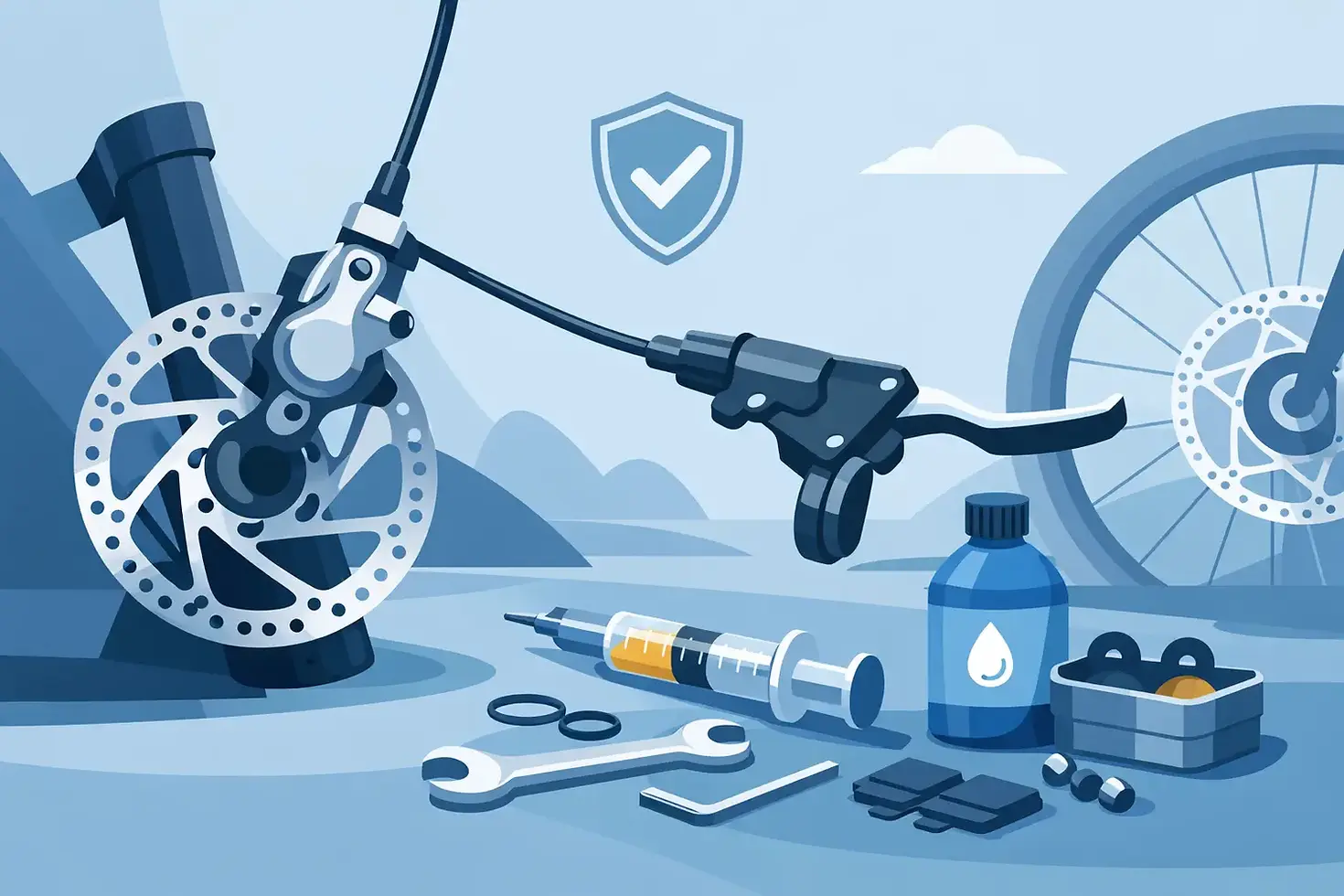
A proper service starts with an inspection, not an automatic parts swap. The mechanic checks lever action, hose condition, caliper mounting, pad wear, rotor thickness and alignment. They also look for fluid leaks around the lever, hose fittings and caliper pistons.
Pads are measured rather than judged by appearance alone. Once the friction material is worn close to its backing plate, braking performance and heat control can suffer. Continuing to ride can also damage the rotor, turning a straightforward pad replacement into a more expensive repair.
The rotors are checked for wear, scoring, warping and contamination. A rotor has a minimum thickness specified by its manufacturer. It may still look serviceable, but if it is below that limit it should be replaced. Bent rotors can sometimes be carefully trued, although a badly warped or heat-damaged rotor is better replaced than repeatedly adjusted.
The caliper is then centred correctly over the rotor and the pistons checked for even movement. Sticky pistons can cause constant rubbing, uneven pad wear or a lever that feels inconsistent. Cleaning and exercising the pistons may resolve the issue, but worn seals or damaged components call for further work.
If the fluid is old, contaminated or contains air, the brake needs a bleed. This replaces or refreshes the fluid and removes air from the hydraulic line using the correct equipment and fluid type. It is not simply a case of topping up a reservoir.
When Does a Hydraulic Disc Brake Need Attention?
There is no single mileage interval that suits every bicycle. A fair-weather recreational rider may get a long life from pads and fluid, while a daily commuter can wear through pads surprisingly quickly over one winter. Hills, rider weight, cargo, riding style and an e-bike’s extra speed and mass all make a difference.
Book the bike in promptly if the lever pulls nearly to the grip, feels spongy, or changes character during a ride. A firm lever is not the only sign of a healthy brake, but a soft or inconsistent one needs investigation. Do not assume it will improve by itself.
Noise deserves attention too. A light, occasional scrape may be a rotor that needs centring after the wheel has been refitted. Persistent rubbing wastes effort and can point to a sticky piston or bent rotor. Squealing when braking often comes from contaminated pads or rotor, particularly after lubricant, cleaning spray or road grime has reached the braking surface. Sometimes cleaning is enough; often contaminated pads need replacing because the material has absorbed oil.
Other warning signs include visibly thin pads, pulsating through the lever, reduced stopping power, fluid around a brake component, or a wheel that becomes difficult to turn. If a brake has overheated on a long descent and now feels different, have it checked before the next hard ride.
E-bikes Put More Demand on Brakes
E-bike brakes work on the same hydraulic principle, but they often face greater loads. The bike is heavier, journeys may be longer, and riders can maintain higher average speeds. Add panniers, a child seat or regular hill riding and pads can wear at a much faster rate than expected.
This does not mean every e-bike needs a specialist brake system. It does mean brake maintenance should be treated as a routine part of owning one. Correct pad compound, rotor size and component compatibility matter, especially where the original manufacturer specification is designed around the bike’s weight and intended use.
Some e-bike brake levers also contain an electrical cut-off switch that tells the motor to stop assisting when braking. That is separate from the hydraulic system, but it should be checked if a lever is being replaced or a brake-related fault is present. A workshop familiar with modern e-bikes can assess both the braking hardware and the wider system without guesswork.
Why Brake Bleeding Is Not a Casual DIY Job
Enthusiastic home mechanics can carry out basic checks, clean a rotor correctly and replace pads with the right tools and instructions. Bleeding is more exacting. Shimano mineral oil is not interchangeable with DOT fluid used by some other brake manufacturers. Using the wrong fluid can damage seals and invalidate component warranties.
The bleed procedure itself varies by brand and brake model. It requires clean tools, the correct fittings and careful handling to prevent contamination. Even a small amount of oil on pads or a rotor can leave a brake noisy and weak. Fluid should also be kept away from painted surfaces and, on e-bikes, electrical connectors and components.
A professional hydraulic disc brake service is particularly worthwhile where there is a leak, a damaged hose, seized pistons, uncertain fluid history or a brake that still feels wrong after new pads. These are jobs where diagnosis matters as much as the repair.
Simple Checks Between Services
You do not need to dismantle your brakes every week. A short routine before riding helps catch obvious trouble early. Squeeze each lever firmly and make sure it does not pull back to the bar. Spin both wheels and listen for persistent rubbing. Look through the caliper or remove the wheel when appropriate to check there is usable pad material remaining.
Keep chains, sprays and polish well away from rotors and pads. If you clean the bike, use a product suitable for disc brakes on the braking surfaces and a clean lint-free cloth. Never apply lubricant near a rotor and then hope overspray will not reach it.
When removing a wheel, do not pull the hydraulic brake lever while the rotor is out of the caliper. The pistons can move too far together, making it difficult to refit the wheel. A proper pad spacer is useful whenever the wheel is removed for transport or workshop work.
After refitting a wheel, always check that it is securely installed, spin it freely and operate the brake several times before riding. New pads and rotors also need bedding in: a series of controlled stops gradually transfers material to the rotor and produces predictable braking. Until this is done, stopping power may be lower than expected.
What to Expect From a Workshop Visit
A good workshop should explain whether the issue is normal wear, a straightforward adjustment or a fault needing parts. Not every noisy brake requires a full bleed, and not every soft lever is caused by air in the system. A worn pad, contaminated rotor, sticking piston or incorrect setup can produce similar symptoms but needs a different remedy.
At Eastbourne Cycles, brake work is approached as part of the bike’s overall condition. Wheel security, rotor alignment, pad life and braking feel are assessed together, with clear advice before additional parts are fitted. That is especially useful for e-bike riders, where stopping performance has to match the bike’s weight, power and regular use.
If your brakes are quieter than usual but the lever feel has changed, or if they work acceptably only because you have adjusted your riding around them, it is time to get them checked. Reliable brakes give you the confidence to focus on traffic, road surface and the ride ahead.


Comments