
What is a full bike overhaul? Your 2026 guide
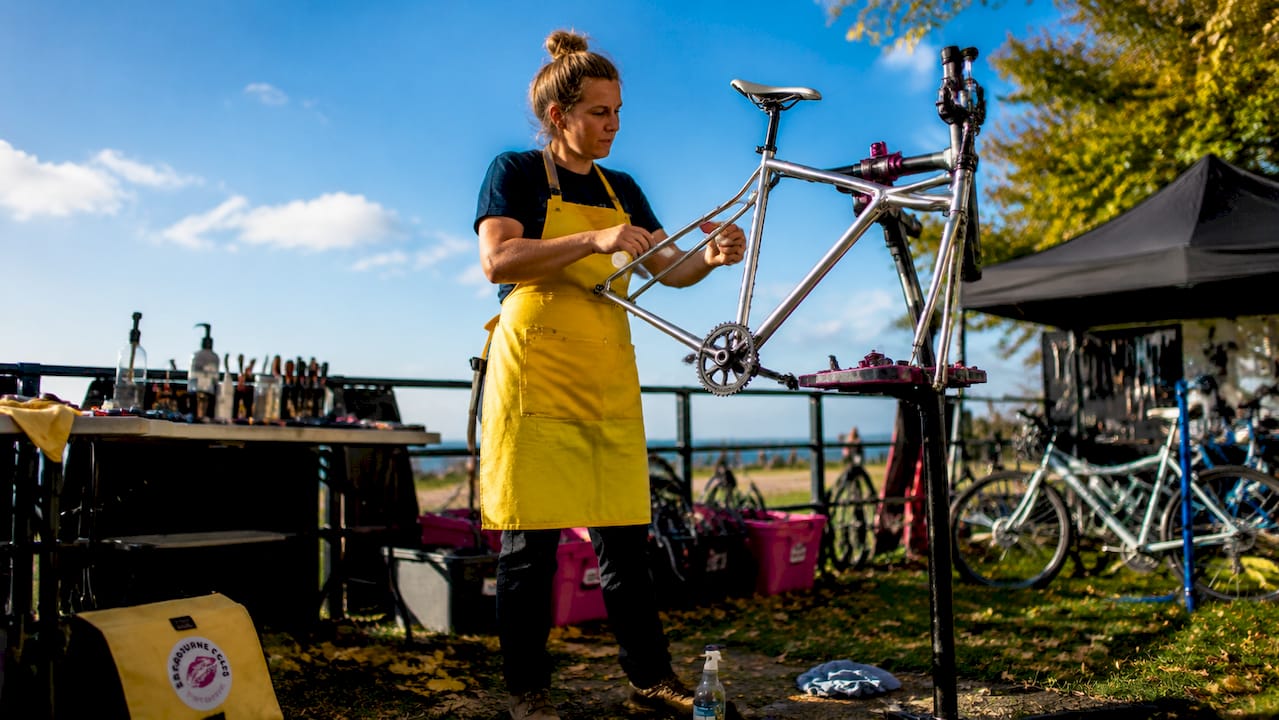
A full bike overhaul is a complete disassembly, cleaning, inspection, and rebuild of every component on your bicycle. Known in professional workshops as a “full strip and rebuild,” it is the highest level of service a bike can receive, sitting well above a standard tune-up or interim service. Complete overhauls cost £300 or more in labour and typically take 10–14 days to complete. That investment reflects the depth of work involved: every bearing, cable, brake, and drivetrain component is removed, assessed, and either serviced or replaced before the bike is rebuilt from scratch.
What is a full bike overhaul and what does it include?
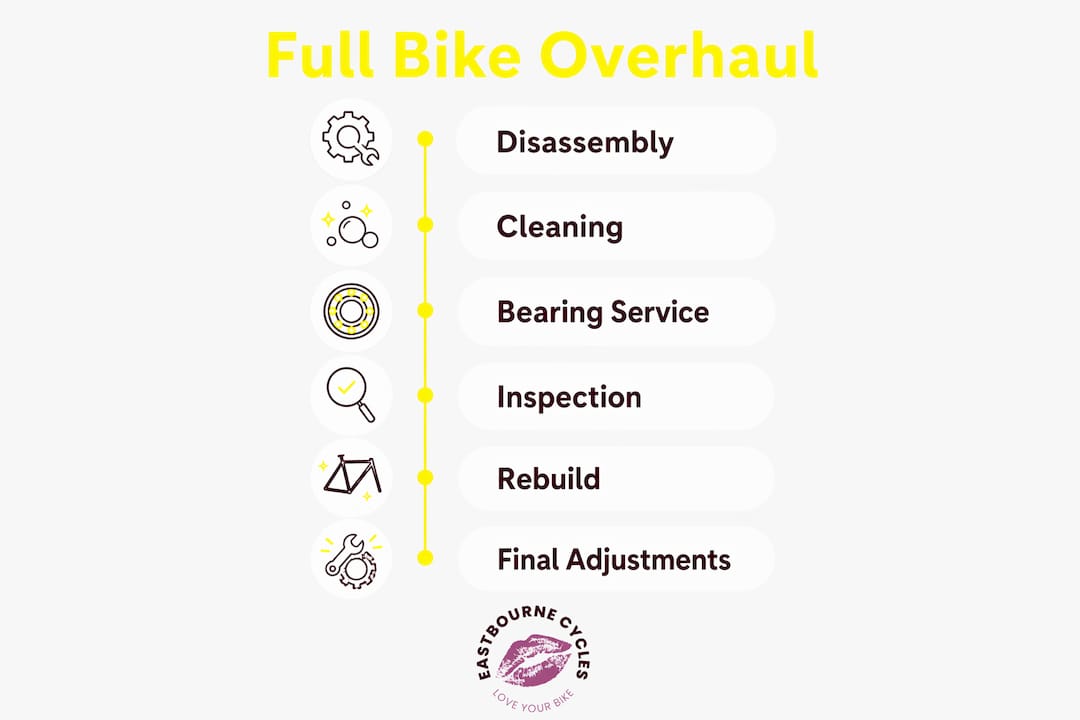
A full bike overhaul is defined as a factory-reset service where the bicycle is stripped to its bare frame and rebuilt component by component. The term “tune-up” lacks a consistent definition across the industry, but a full overhaul is universally understood as the most thorough level of bicycle maintenance available. That distinction matters when you are booking a service and want to know exactly what you are paying for.
The process begins with full disassembly. Every part comes off the frame: wheels, tyres, drivetrain, brakes, handlebars, stem, seatpost, and saddle. The frame itself is cleaned thoroughly, and all contact points are inspected for cracks, corrosion, or damage that would otherwise go unnoticed under grime.
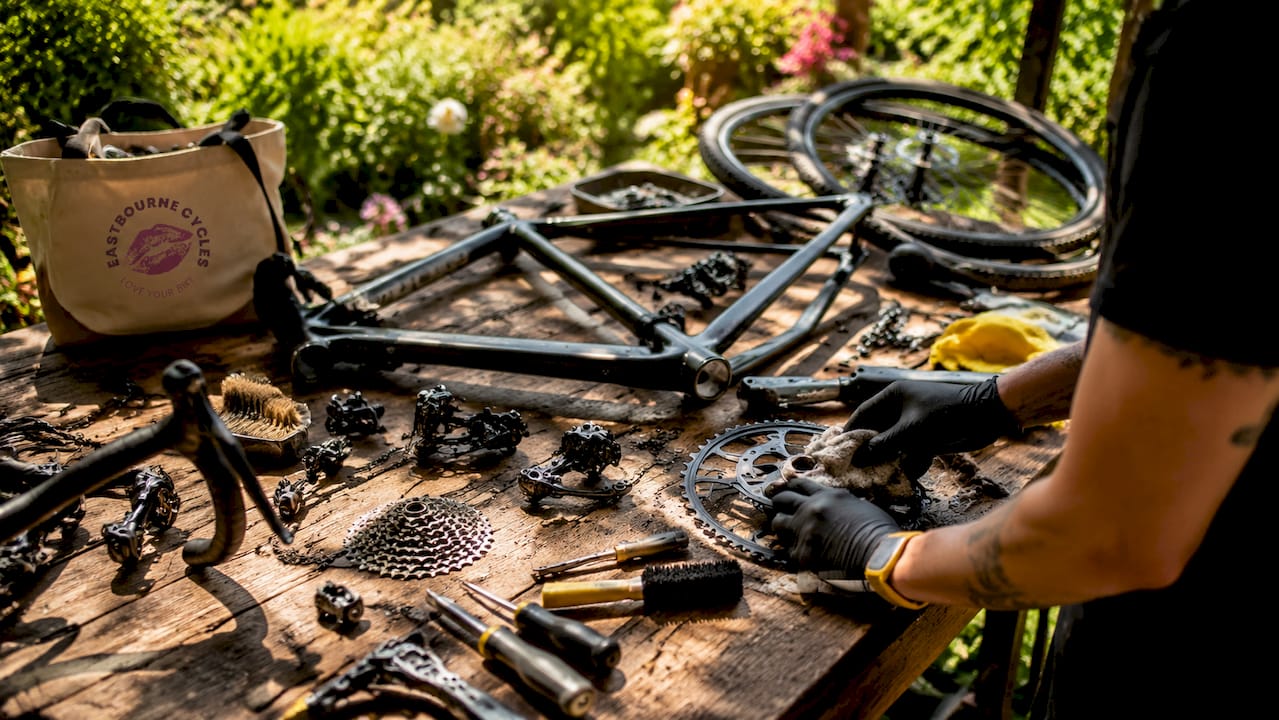
Bearing service is one of the most labour-intensive parts of the job. A comprehensive overhaul covers headset, bottom bracket, and hub bearing service, along with new cables and housings, brake fluid bleeding on hydraulic systems, and a final test ride. Each bearing set is disassembled, cleaned, inspected for wear, re-greased, and reassembled to the correct preload. Worn bearings that feel acceptable during riding often reveal significant play or pitting once stripped down.
The drivetrain receives deep cleaning and inspection. The chain, cassette, chainrings, and derailleur pulleys accumulate grit that accelerates wear far faster than most cyclists realise. Cables and brake pads are replaced as a matter of course, not just when they appear worn. Hydraulic disc brake systems are bled to restore firm, consistent lever feel.
Pro Tip: Re-greasing all threaded interfaces, including the bottom bracket shell, seatpost clamp, and stem bolts, is the step most often skipped during partial services. Neglecting this causes creaking and, over time, seized components that are expensive to remove.
Final assembly includes torque checks on every fastener using a calibrated torque wrench. Derailleurs are indexed, brakes are bedded in, and the bike goes out for a test ride before it is returned to you.
How often should you schedule a full bike overhaul?
Experts recommend a full overhaul every 6–12 months or every 5,000 km for most regular riders. That interval is a starting point, not a fixed rule. Several factors push the frequency higher.
Riding conditions have the biggest influence on service intervals. Cyclists who commute through wet winters, ride off-road, or cover high weekly mileage will wear components significantly faster than fair-weather riders. Riders in wet or muddy conditions may need overhauls twice a year to prevent bearing failure and cable corrosion from becoming serious problems.
The type of bike also matters. E-bikes with Bosch or Shimano drive systems carry additional components, including motor bearings and electronic connections, that benefit from the same thorough inspection. A full strip and rebuild service is the only way to properly assess those systems alongside the mechanical components.
Smaller, more frequent maintenance tasks reduce the workload at overhaul time and extend the life of expensive parts. A regular bike safety check before commuting, combined with chain cleaning every few rides, keeps wear rates low between full services. The key point is that a full overhaul should not be the only maintenance your bike receives. It is the reset that restores everything to baseline, not a substitute for ongoing care.
Here is a practical guide to choosing your overhaul interval:
Every 6 months: Commuters riding year-round in the UK, cyclists covering more than 150 km per week, or anyone riding regularly in wet conditions.
Every 12 months: Recreational riders covering moderate distances in mixed conditions, or those who carry out regular cleaning and chain maintenance between services.
Every 5,000 km: A useful mileage-based trigger for cyclists who track their rides, regardless of the time elapsed.
After any crash or impact: Even a minor collision can cause hidden frame or bearing damage that only a full inspection will reveal.
When performance drops noticeably: Sluggish shifting, brake fade, or persistent creaking are signals that a full service is overdue rather than a sign that a quick adjustment will suffice.
For a more detailed breakdown of service intervals, the guide on how often a bike should be serviced covers the full range of riding scenarios.
What does a full bike overhaul cost and how long does it take?
Labour for a full overhaul starts at around £300 and rises depending on bike complexity. That figure covers the mechanic’s time for disassembly, cleaning, bearing service, reassembly, and testing. Parts are charged separately, and this is where the final bill can vary considerably.
Hidden damage such as seized bearings or corroded cables often emerges during disassembly, adding to both the time and cost of the service. A mechanic cannot know the condition of internal components until the bike is fully stripped. Internally routed cables, press-fit bottom brackets, and cartridge bearings are particularly prone to concealing wear that only becomes visible once removed.
Service element | Typical scope | Notes |
Labour (base) | Full disassembly and rebuild | Starting from £300 in 2026 |
Cables and housings | Full replacement | Included in most overhaul packages |
Bearing service | Headset, bottom bracket, hubs | Replacement if worn beyond service limits |
Brake fluid bleed | Hydraulic systems only | Per caliper, additional cost |
Turnaround time | 10–14 days | Longer for complex or damaged bikes |
Turnaround times of 10–14 days are standard at professional workshops. Bikes with internally routed cables, electronic groupsets, or significant corrosion take longer. Internally routed cables and bearing issues can extend overhaul time significantly, so workshops advise clients of potential additional costs before proceeding. A transparent workshop will contact you before fitting any parts beyond the agreed scope.
Pro Tip: Budget an additional 20–30% above the base labour quote to cover parts. A cassette, chain, cables, brake pads, and bar tape together add up quickly, and replacing worn items during an overhaul is always cheaper than a separate visit later.
Cables and housings often require follow-up adjustments within the first 50–100 km as new cables bed in and stretch slightly. Book a brief follow-up check with your mechanic after your first few rides. Most reputable workshops include this as part of the service. For a full breakdown of what to budget, the bike repair pricing guide for 2026 sets out typical costs across service tiers.
How does a full bike overhaul improve performance and extend bike life?
A full overhaul restores the riding feel you had when the bike was new. Bearings that have developed play make steering vague and pedalling inefficient. Fresh cables give brakes and gears a crisp, immediate response that worn, stretched cables cannot replicate. The cumulative effect of servicing every system at once is a bike that feels noticeably better in every aspect of its performance.
Regular maintenance can extend drivetrain life by 200–300% compared to running components until they fail. That figure reflects the difference between a drivetrain that is cleaned and lubricated regularly versus one that is left to wear under accumulated grit. A full overhaul resets that wear clock and gives every component the best possible starting point.
The safety benefits are equally significant. Worn brake pads, corroded cables, and loose headset bearings are all failure points that a full overhaul identifies and resolves before they cause an accident. Professional mechanics often find issues during disassembly that the rider had no awareness of, including cracked cable ends, loose spoke nipples, and bearing races that have started to pit.
The benefits of a full overhaul include:
Restored shifting precision: Clean, correctly tensioned cables and freshly indexed derailleurs eliminate ghost shifting and missed changes.
Consistent braking: New brake pads and bled hydraulic systems restore the stopping power and modulation the bike had when new.
Smooth, quiet running: Re-greased bearings and threaded interfaces eliminate creaking and grinding noises that develop gradually over time.
Extended component life: Thorough cleaning removes the abrasive grit that accelerates wear on chains, cassettes, and chainrings.
Rider confidence: Knowing every system has been inspected and serviced removes uncertainty, particularly on longer or more demanding rides.
Combining a full overhaul with seasonal maintenance, such as a pre-winter check and a post-winter clean, gives your bike the best chance of lasting many years without major component failure.
Key takeaways
A full bike overhaul is the only service that addresses every component simultaneously, making it the most effective way to restore performance, safety, and longevity to any bicycle.
Point | Details |
Definition of a full overhaul | A complete strip, clean, bearing service, and rebuild returning the bike to factory condition. |
Recommended frequency | Every 6–12 months or every 5,000 km, more often in wet or demanding conditions. |
Typical cost and time | Labour starts from £300; turnaround is 10–14 days, with parts charged separately. |
Hidden damage is common | Seized bearings and corroded cables are regularly found only during full disassembly. |
Performance and safety gains | Overhauled bikes shift precisely, brake reliably, and run quietly with extended component life. |
What I have learned after years in the workshop
Most cyclists come in expecting a full overhaul to be a straightforward job with a predictable bill. The reality is that the disassembly stage is where the real story of a bike’s life reveals itself. I have stripped bikes that looked fine from the outside and found bottom brackets so corroded they required heat and specialist tools to remove. I have found cables that were one hard brake application away from snapping. The overhaul does not just service the bike. It tells you what has actually been happening inside it.
The misconception I encounter most often is that a full overhaul is only for old or neglected bikes. Riders on relatively new bikes sometimes resist booking one because they feel the bike is “fine.” Fine is not the same as properly serviced. A two-year-old bike ridden through two UK winters has almost certainly developed bearing wear and cable corrosion that a visual inspection will not catch.
My practical advice: be honest with your mechanic about how and where you ride. That information changes the service. A coastal commuter bike needs different attention to a dry-weather road bike. And when your mechanic calls mid-service to flag an unexpected issue, take it seriously. That call is the overhaul doing exactly what it is supposed to do.
— Guy
Eastbournecycles: professional overhaul service in Eastbourne

Eastbournecycles has been servicing bikes and e-bikes in Eastbourne for over 12 years, with direct relationships with Bosch, Yamaha, and Shimano ensuring genuine parts and accurate diagnostics. The workshop carries out full strip and rebuild services with transparent pricing, clear communication on any additional parts required, and a 4.7-star Google rating that reflects consistent, reliable work.
Whether your bike is a daily commuter, a road bike, or an e-bike with a Bosch or Shimano drive unit, the team at Eastbournecycles has the tools and experience to return it to its best. Book your bike service with Eastbournecycles today and get a clear assessment of what your bike needs before any work begins.
FAQ
What is included in a full bike overhaul?
A full bike overhaul includes complete disassembly, frame cleaning, bearing service for the headset, bottom bracket and hubs, new cables and housings, brake pad replacement, hydraulic brake bleeding where applicable, and a full rebuild with torque checks and a test ride.
How long does a full bike overhaul take?
Most workshops complete a full overhaul in 10–14 days. Bikes with internal cable routing, electronic groupsets, or significant corrosion may take longer.
How much does a full bike overhaul cost?
Labour typically starts from £300, with parts charged separately. Budget an additional amount for consumables such as cables, brake pads, chain, and cassette, as these are commonly replaced during the service.
Is a full overhaul the same as a tune-up?
No. A tune-up is an inconsistently defined service that varies between workshops. A full overhaul is the highest level of bicycle maintenance, involving complete disassembly and a rebuild of every component.
How do I know when my bike needs a full overhaul?
Common signs include sluggish or imprecise gear shifting, reduced braking performance, persistent creaking, or a general loss of smoothness in the ride. Riders covering high mileage or riding in wet conditions should schedule an overhaul at least once a year regardless of symptoms.
Recommended


Comments