
What is a bike service? Your complete 2026 guide
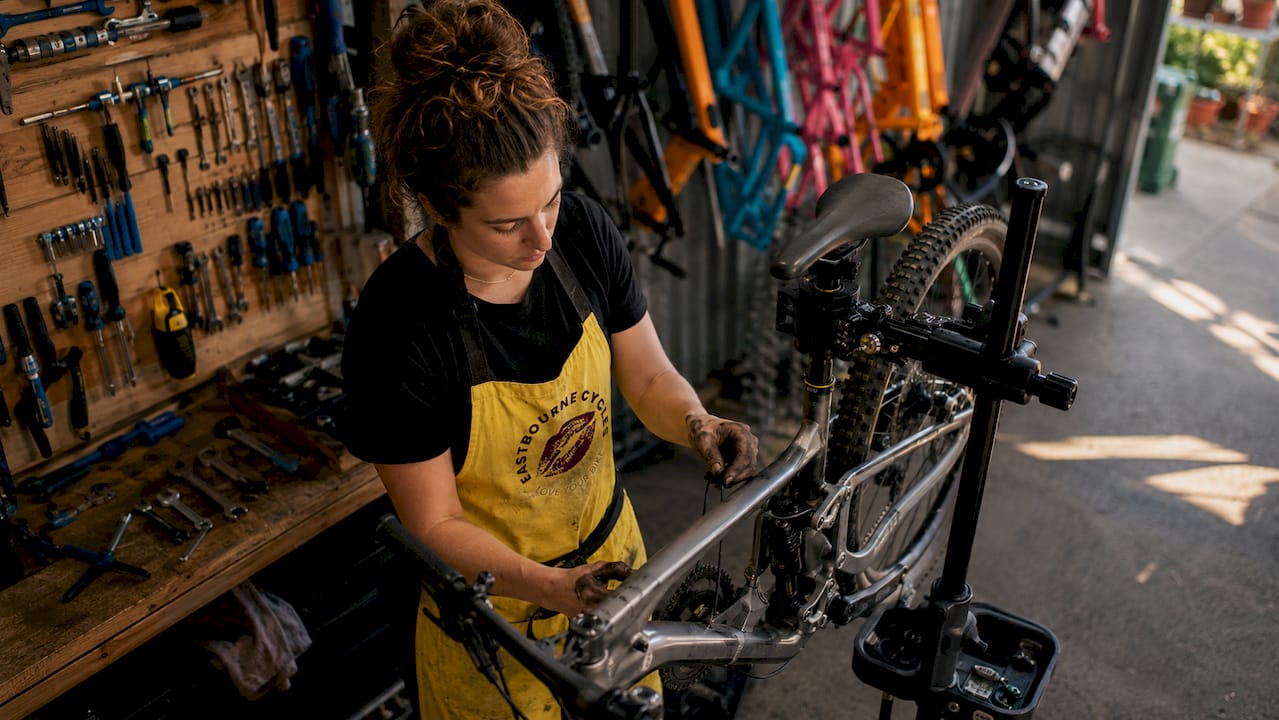
A bike service is a preventive maintenance procedure that inspects, cleans, adjusts, and restores all critical systems on your bicycle, covering everything from the drivetrain and brakes to bearings and bolt torques. It is not a repair. A full bike service aims to prevent breakdowns before they happen, rather than responding to parts that have already failed. Whether you ride daily or occasionally, understanding what a service involves helps you protect your bike, your safety, and your wallet.
What does a full bike service involve?
A standard bike service is a comprehensive assessment designed to restore your bicycle to a safe and reliable standard across all key systems. Service durations range from 30–45 minutes for a basic tune-up to 2–3 hours for a major overhaul. The depth of work depends on the service tier you choose, but a proper full service covers far more than most riders expect.
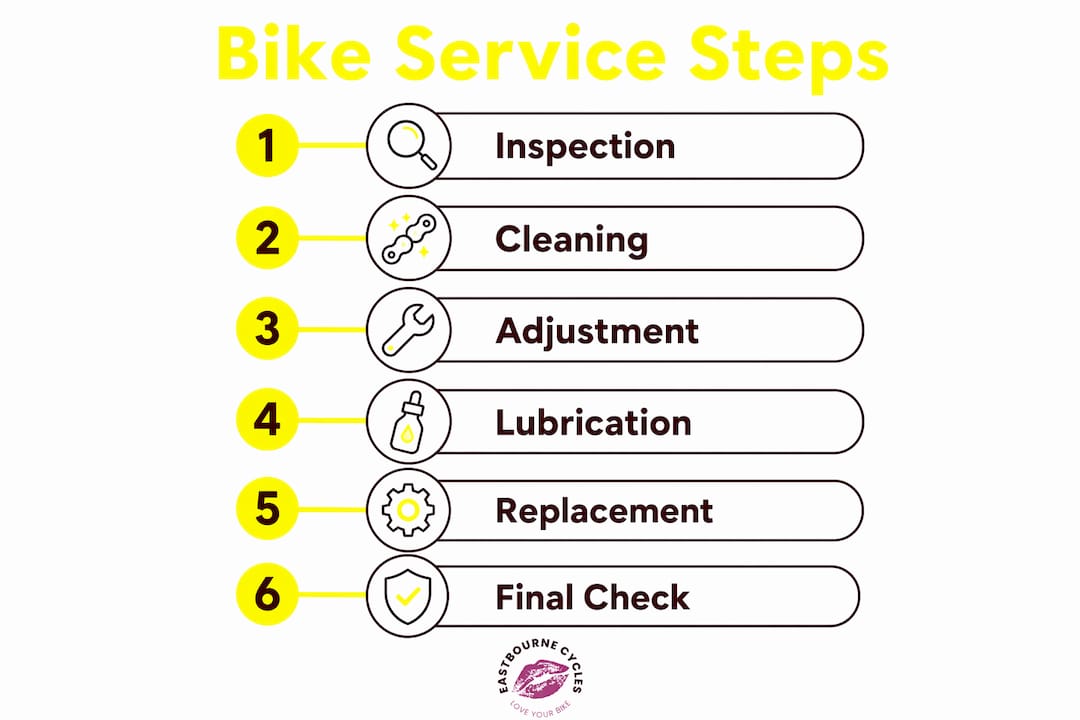
A professional mechanic works through the bike systematically. Here is what a full service typically includes:
Frame and fork inspection. The mechanic checks for cracks, corrosion, and structural damage that could compromise safety under load.
Wheel trueness and spoke tension. Wheels are checked for lateral and radial wobble. Loose or uneven spoke tension causes premature rim wear and handling problems.
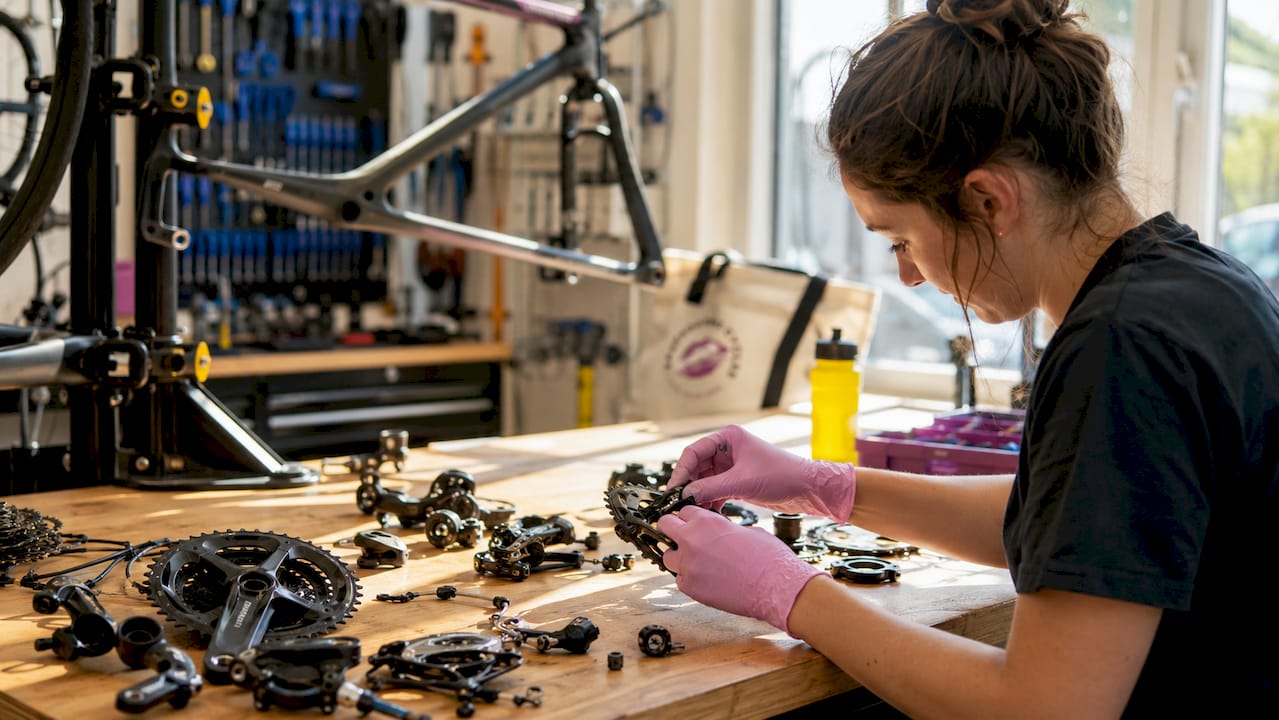
Bearing inspection. The headset (steering), bottom bracket (pedalling axle), and wheel hubs are all checked for play and smooth rotation. Worn bearings create drag and accelerate damage to surrounding components.
Drivetrain cleaning and lubrication. The chain, cassette, chainrings, and derailleurs are cleaned and lubricated. Gear indexing is adjusted so shifting is precise across all gears.
Brake system check. Brake pads, cables, and levers are inspected. Cable tension is set correctly, and hydraulic brakes are bled if fluid has degraded or the lever feel has become spongy.
Bolt torque verification. All critical fasteners, including stem bolts, brake caliper bolts, and seatpost clamps, are checked against manufacturer torque specifications. An under-torqued stem is a genuine safety hazard.
Consumables replacement. Chains, brake pads, and cables are replaced as needed. This is where preventive replacement matters most: a worn chain left in place will damage the cassette and chainrings, turning a £15 chain replacement into a £100+ drivetrain repair.
A master overhaul goes further still. It involves a full strip-down and rebuild, with every bearing repacked or replaced, every component cleaned individually, and the frame inspected bare. This level of service suits bikes with high mileage or those that have not been serviced in several years.
Pro Tip: Ask your mechanic for a written service checklist before and after the work. A good workshop will tell you exactly what was done, what was replaced, and what to watch for next time.
How often should you service your bike?
Service frequency depends on how much you ride, where you ride, and what type of bike you use. Calendar time alone is a poor guide. Mileage and environmental exposure are far more accurate triggers for scheduling a service.
Rider type | Annual mileage | Recommended interval |
Casual rider | Under 1,000 miles | Once a year |
Regular commuter | 1,000–3,000 miles | Every 4–6 months |
Serious or sportive rider | 3,000+ miles | Every 3–4 months |
Harsh or coastal conditions | Any mileage | Every 2–3 months |
The service intervals above reflect the reality that mileage and riding conditions drive wear far more than time does. A bike ridden twice a week in dry conditions ages very differently from one used daily for winter commuting through salt and grit.
Coastal riding is particularly demanding. Salt air accelerates corrosion on cables, chain links, and bearing surfaces. If you ride near the sea, or through the winter months, shortening your service interval to every 2–3 months protects components that would otherwise degrade invisibly between annual visits.
E-bikes carry additional considerations. E-bikes require more frequent servicing because motor torque and the extra weight of the battery system place greater stress on chains, cassettes, tyres, and brakes. Specialist diagnostics are often necessary beyond standard mechanical checks. Ignoring manufacturer-recommended intervals on an e-bike risks voiding the warranty and facing costly motor or battery failures that a timely service would have prevented.
Pro Tip: Note your mileage when you book a service, not just the date. If you ride 200 miles a month in winter, you will need a service sooner than your calendar reminder suggests.
How does a bike service differ from a repair or tune-up?
The terminology used by bike shops varies, and that variation causes genuine confusion. Understanding the difference helps you ask for the right work and avoid paying for things you do not need.
A bike service is preventative and systematic. It covers the whole bicycle on a scheduled basis, replacing consumables before they fail and adjusting systems before they degrade. A repair is reactive. You bring the bike in because something is broken, and the mechanic fixes that specific fault. Both are necessary, but they serve different purposes.
A tune-up sits between the two. It typically covers wear items and minor adjustments, such as gear indexing, brake cable tension, and chain lubrication, without the full inspection of bearings, bolt torques, and structural components. Tune-ups are useful between full services but are not a substitute for them.
Service tiers vary between workshops, which is why requesting a detailed checklist matters. A rough guide to what each tier covers:
Basic safety check (£20–£60): Brakes, tyres, quick-release skewers, and a visual frame inspection. Suitable before a one-off ride or after storage.
Full service (£120–£200+): Complete drivetrain clean, bearing check, wheel true, brake bleed or cable replacement, and bolt torque check. Parts are usually extra and quoted separately.
Master overhaul: Full strip-down and rebuild. Priced on assessment, as the scope depends on the bike’s condition.
Not all shops standardise their service tiers, so always ask what is included before you book. A transparent workshop will provide a checklist and seek your approval before replacing any parts.
Why is professional bike servicing important?
Regular professional servicing protects your safety, extends your bike’s lifespan, and saves money over time. The case for it is straightforward, but the detail behind it is worth understanding.
Many components wear incrementally without obvious symptoms until they fail. A chain stretches gradually. Brake pads thin slowly. Bearings develop play over hundreds of miles. You may not notice any of these changes during a ride, but a trained mechanic will spot them immediately. Catching wear early prevents the cascading damage that turns a minor adjustment into a major repair bill.
The safety argument is equally strong. Brake responsiveness and gear precision are not just about comfort. A brake cable that snaps mid-descent or a derailleur that throws the chain into the wheel are genuine hazards. Professional servicing keeps these systems within safe operating limits.
“Framing bike servicing as an investment in safety and longevity encourages riders to adopt regular maintenance habits rather than reactive fixes.” Ribble Cycles
The financial logic is also clear. A worn chain costs around £15–£25 to replace. Left unchecked, it wears the cassette and chainrings, pushing the replacement cost to £80–£150 or more. Regular servicing is not an expense. It is the cheaper option.
Practical tips for maintaining your bike between services
Professional servicing sets the baseline, but what you do between visits determines how quickly your bike deteriorates. A few consistent habits make a real difference.
The ABC pre-ride check is the most practical starting point. Before every ride, check three things:
Air: Squeeze your tyres or use a gauge. Road tyres typically run at 80–120 psi; mountain bike tyres at 25–35 psi. Riding on under-inflated tyres increases puncture risk and rolling resistance.
Brakes: Squeeze each lever firmly. There should be no sponginess, and the lever should not reach the handlebar. If it does, the cables need adjusting or the hydraulic system needs bleeding.
Chain: Run your fingers lightly along the chain. If it feels dry or gritty, clean and lubricate it before riding. A dry chain wears faster and shifts poorly.
Beyond the ABC check, wipe your bike down after wet or muddy rides. Grit left on the chain and cassette acts as an abrasive. Keep your tyres inflated to the correct pressure for your riding surface. Listen for unusual noises during rides: creaking from the bottom bracket, clicking from the drivetrain, or rubbing from the brakes all signal that something needs attention. A pre-ride safety check takes less than two minutes and can prevent a roadside problem.
Pro Tip: Lubricate your chain every 100–150 miles in dry conditions, and every 50–75 miles in wet weather. Use a wet lube for winter riding and a dry lube for summer.
Key takeaways
A bike service is a preventive, whole-bike maintenance process that protects your safety, extends component life, and reduces long-term repair costs.
Point | Details |
Service vs repair | A service is preventive and systematic; a repair responds to a specific fault after it occurs. |
Service intervals | Casual riders need an annual service; commuters every 4–6 months; serious riders every 3–4 months. |
Harsh conditions | Coastal or winter riding shortens intervals to every 2–3 months due to salt and grit accelerating wear. |
E-bike servicing | E-bikes need more frequent specialist servicing due to motor torque stress and warranty requirements. |
DIY between services | The ABC check (Air, Brakes, Chain) before every ride prolongs component life and catches early issues. |
Why I think most cyclists service their bikes too late
Riders consistently wait for something to go wrong before booking a service. I understand the logic: if the bike feels fine, why spend money on it? The problem is that “feels fine” is not the same as “is fine.” Bearings, chains, and brake pads all degrade well below the threshold of what you notice on a ride.
The most common misconception I encounter is that a service is only necessary when something breaks or shifts badly. By that point, the damage is already done. A chain that has been running worn for two months has likely taken the cassette with it. What would have been a £20 fix becomes a £120 one.
The riders who get the best value from their bikes are the ones who treat servicing as routine, not remedial. They book a service at the start of spring, again before winter, and they do the ABC check before every ride. Their bikes last longer, perform better, and cost less to maintain over a five-year period than bikes that only see a mechanic when something snaps.
My honest recommendation is to find a workshop that gives you a written checklist, explains what they found, and does not replace parts without asking first. Transparency is the mark of a good mechanic. If a shop cannot tell you exactly what they did and why, find one that can.
— Guy
Eastbourne Cycles: expert servicing for every type of rider
Eastbourne Cycles provides professional bike and e-bike servicing for riders across Eastbourne and the surrounding area, with over 12 years of experience and a 4.7-star Google rating.

Whether you need a basic safety check before the season starts or a full overhaul after a hard winter of commuting, the team at Eastbourne Cycles covers it all. Direct relationships with manufacturers including Bosch, Yamaha, and Shimano mean genuine parts and factory-level diagnostics for e-bikes, not guesswork. Pricing is transparent, and no parts are replaced without your approval. Book your bike service online or visit the workshop to discuss what your bike needs. For e-bike owners, dedicated e-bike servicing and repairs are available with specialist diagnostic tools.
FAQ
What is included in a standard bike service?
A standard bike service covers drivetrain cleaning and lubrication, brake inspection and adjustment, wheel trueness, bearing checks, and bolt torque verification. Consumables such as chains, brake pads, and cables are replaced as needed, with parts quoted separately.
How much does a bike service cost in the UK?
Basic safety checks typically cost £20–£60, while a comprehensive annual service ranges from £120 to £200 or more, with parts charged additionally. Prices vary by workshop and the depth of work required.
How often should I service my bike?
Casual riders need a service once a year, regular commuters every 4–6 months, and serious riders every 3–4 months. Riding in coastal or winter conditions shortens this to every 2–3 months.
Do e-bikes need more frequent servicing than standard bikes?
Yes. E-bikes place greater stress on mechanical components due to motor torque and added weight, and they require specialist diagnostics that go beyond standard bike care. Following manufacturer-recommended intervals protects the warranty and prevents costly failures.
What is the difference between a bike service and a tune-up?
A bike tune-up covers minor adjustments and wear items such as gear indexing and brake cable tension. A full service is more thorough, including bearing inspection, structural checks, and bolt torque verification across the whole bicycle.
Recommended


Comments